Inside tour of The Step Pyramid
Inside tour of The Step Pyramid
Beneath the golden sands of Saqqara, just south of Cairo, rises a monument that changed the course of architectural history: the Step Pyramid of Djoser. As Egypt’s first pyramid and the world’s earliest large-scale stone structure, it’s more than just a tomb—it’s a revolution in design, a symbol of divine kingship, and a breathtaking journey into the ancient mind. An inside tour of this 4,700-year-old marvel is nothing short of stepping into the dawn of civilization.
Commissioned by Pharaoh Djoser of the Third Dynasty and designed by his brilliant architect Imhotep, the Step Pyramid was constructed around 2667–2648 BCE. Unlike the smooth-sided pyramids of Giza, this one rises in six distinct tiers, originally intended as a series of mastabas (flat-roofed tombs) stacked atop one another. The result is a towering, layered structure that reaches over 60 meters high—a bold statement of royal ambition and divine connection.
The tour begins at the Saqqara necropolis, a sprawling complex of tombs, temples, and courtyards. As you approach the pyramid, its weathered limestone blocks and imposing silhouette dominate the horizon. The entrance to the pyramid was reopened to the public after extensive restoration, allowing visitors to descend into its ancient heart for the first time in centuries.
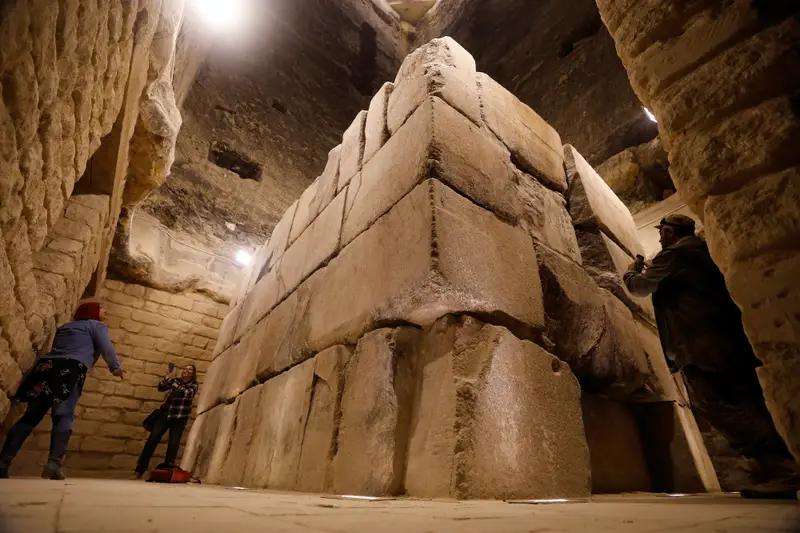
Inside, the experience is both humbling and exhilarating. You enter through a narrow passageway, ducking beneath low ceilings and walking along stone corridors that echo with the footsteps of history. The air is cool and still, and the walls—though stripped of decoration—radiate a quiet power. Wooden beams and modern supports have been added to ensure safety, but the sense of antiquity remains untouched.
At the core of the pyramid lies a vertical shaft nearly 28 meters deep, which once held the pharaoh’s sarcophagus. Surrounding it are a network of tunnels and chambers, some of which were used to store offerings, others possibly symbolic pathways for the king’s soul to ascend to the heavens. Though the original burial chamber is now empty, the sheer scale and complexity of the interior layout speak volumes about the spiritual and political significance of the structure.
Beyond the pyramid itself, the surrounding complex is equally fascinating. The Great South Court, flanked by ceremonial structures and boundary markers, was likely used for royal rituals. The Heb-Sed Court, with its dummy chapels and symbolic architecture, was designed for the king’s rejuvenation festival—a ritual meant to renew his power and divine favor.
What makes the Step Pyramid tour truly unforgettable is the sense of innovation it conveys. This was not just a tomb—it was a prototype, a bold experiment that paved the way for the grand pyramids of Giza and beyond. Imhotep’s vision transformed mudbrick into stone, and in doing so, he laid the foundation for millennia of architectural achievement.
Today, walking through the Step Pyramid is like tracing the blueprint of ancient genius. It’s a place where engineering meets eternity, where every stone whispers of a civilization’s quest for immortality. Whether you’re a history enthusiast, an architecture lover, or simply a curious traveler, the inside tour of the Step Pyramid offers a rare and profound connection to the origins of one of humanity’s greatest legacies.






.jpg)