Tomb of Wahtye
Tomb of Wahtye
Hidden beneath the sands of Saqqara, Egypt’s vast ancient necropolis, lies a breathtaking testament to the artistry, beliefs, and daily life of the Old Kingdom: the Tomb of Wahtye. Discovered in 2018 by an Egyptian archaeological team led by Dr. Mostafa Waziri, this remarkably preserved tomb has captivated the world with its vibrant wall carvings and rich narrative, offering a rare window into the 5th Dynasty, more than 4,400 years ago.
Wahtye was a high-ranking priest and royal official who served under Pharaoh Neferirkare Kakai. His titles included "Divine Inspector," "Royal Purifier," and "Priest of King Neferirkare," reflecting both his political influence and spiritual role in the royal court. But while the tomb may have been built for one man, its walls tell a much grander story: that of an era flourishing with culture, craftsmanship, and cosmic order.
The tomb itself is carved into the limestone bedrock and measures about 10 meters long and 3 meters wide. What sets it apart, however, is the extraordinary preservation of its colorful reliefs and carvings—scenes that feel strikingly alive despite being millennia old. The walls are alive with depictions of daily life: men fishing in the Nile, craftsmen at work, animals being herded, and offerings of bread, beer, and meats being presented to the gods and the deceased. These vignettes serve both as a record and a spiritual provision, believed to ensure Wahtye’s comfort in the afterlife.
On the western wall, a larger-than-life depiction of Wahtye himself sits in dignified repose, surrounded by members of his family. Inscriptions name his mother, Meret Mehenet, his wife Weret Ptah, and his children—remarkably humanizing details that make the tomb feel intimate and personal. The faces, hands, and postures are carefully sculpted, with naturalistic proportions and expressive eyes still ringed in traces of original paint.
Another fascinating aspect of the tomb is the presence of five hidden shafts, one of which led to a remarkable discovery in 2019—a cache of mummies and artifacts believed to belong to Wahtye’s relatives. This find deepens the tomb’s value as a family mausoleum, a rare insight into elite burial customs and kinship structures of the time.
Unlike other tombs that have suffered looting or natural decay, Wahtye’s tomb remained largely untouched for thousands of years—a stroke of fortune that’s given archaeologists and historians a chance to study its features in nearly pristine condition. The attention to detail and richness of the decoration suggest a period of prosperity and artistic excellence during the 5th Dynasty, as well as Wahtye’s elevated status.
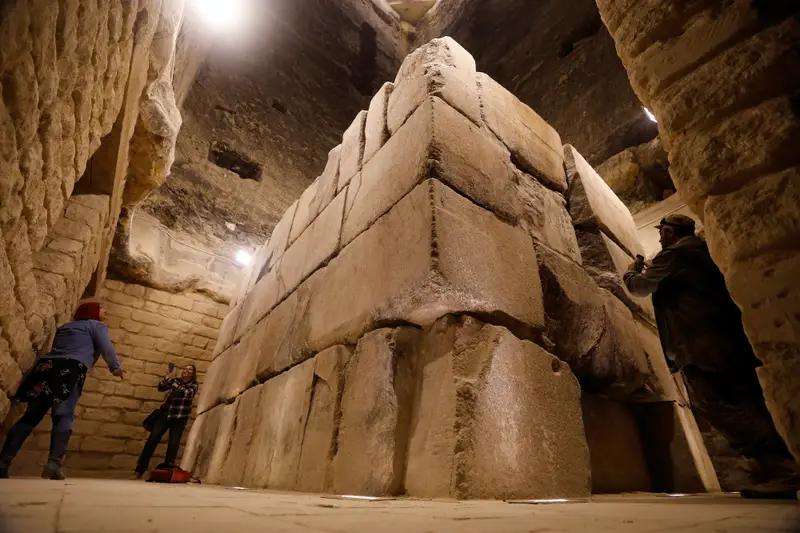
Saqqara itself is no stranger to monumental history—it’s home to the famed Step Pyramid of Djoser, Egypt’s oldest stone pyramid. But the discovery of Wahtye’s tomb adds emotional depth to the plateau. While pyramids celebrate gods and kings, this tomb celebrates a man’s earthly role and his place in society, family, and eternity.
Today, the Tomb of Wahtye stands not just as a relic, but as a vivid narrative frozen in stone—an ancient life remembered in color and line, caught between earth and afterlife. For modern visitors and scholars alike, it is a portal into the rhythms of an ancient world, echoing with the artistry and humanity of an Egyptian priest who sought immortality through faith, family, and craftsmanship.






.jpg)